 Súgó
Súgó

 A téma zárva.




Idézet
Socket T – The Socket You Can Use Only Once?
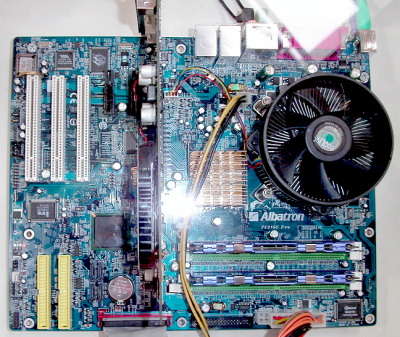
During the whole CeBIT exhibition I noticed plethora of mainboards based on the newest Grantsdale (i915P/i915G) and Alderwood (i925X) chipsets with corrupted Socket T. There were so many damaged Sockets for Intel’s LGA775 processors around that I asked from a mainboard maker about this issue. Apparently, the problem with pins in Socket T is real and is pretty nasty.
After a number of processor installations tiny pins bend and the whole mainboard becomes useless. This is certainly not a problem for PCs that are never upgraded, but users who modernize their computers should be very careful with installation of new CPUs. Furthermore, system integrators should probably get themselves prepared for pretty tough microprocessor installation. The issue should also be extremely horrible for test laboratories, where plethora of chips may be changed on a single mainboard per single day.
There are mainboard makers – ASUSTeK, Soltek, Jetway, etc – who tend to solve the problem rather radically – they install Socket 478 on their Grantsdale mainboards. This certainly limits upgrade options for particular products, but undisputable solves the problem of damaged pins. Loads of mainboard makers are not satisfied with Socket T, as every such socket costs them about $7-8 and brings additional issues, including those with warranty.
Besides, there is a rumour going around the show that mainboard makers are also not happy with DDR2 and increased complexity of PCBs it brings.
From: Xbitlabs
During the whole CeBIT exhibition I noticed plethora of mainboards based on the newest Grantsdale (i915P/i915G) and Alderwood (i925X) chipsets with corrupted Socket T. There were so many damaged Sockets for Intel’s LGA775 processors around that I asked from a mainboard maker about this issue. Apparently, the problem with pins in Socket T is real and is pretty nasty.
After a number of processor installations tiny pins bend and the whole mainboard becomes useless. This is certainly not a problem for PCs that are never upgraded, but users who modernize their computers should be very careful with installation of new CPUs. Furthermore, system integrators should probably get themselves prepared for pretty tough microprocessor installation. The issue should also be extremely horrible for test laboratories, where plethora of chips may be changed on a single mainboard per single day.
There are mainboard makers – ASUSTeK, Soltek, Jetway, etc – who tend to solve the problem rather radically – they install Socket 478 on their Grantsdale mainboards. This certainly limits upgrade options for particular products, but undisputable solves the problem of damaged pins. Loads of mainboard makers are not satisfied with Socket T, as every such socket costs them about $7-8 and brings additional issues, including those with warranty.
Besides, there is a rumour going around the show that mainboard makers are also not happy with DDR2 and increased complexity of PCBs it brings.
From: Xbitlabs


Szerkesztette: authenticDViD 2004. 04. 12. 00:46 -kor






 aztán ez ott rohad meg a gépben!